
The "Cognitive Kitchen" Revolution: Why 2026 Couples are Designing for Mental Clarity, Not Just Meals
The "Cognitive Kitchen" Revolution: Why 2026 Couples are Designing for Mental Clarity, Not Just Meals
For decades, the "dream kitchen" was defined by industrial-sized ranges and marble islands large enough to host a banquet. But as we navigate 2026, a quieter, more sophisticated revolution is taking place. At AiTotul, we’ve seen the emergence of the Cognitive Kitchen.
This isn't just about nutrition; it's about Neuro-inclusive Architecture. In a world of digital overstimulation, 2026 couples are reclaiming the kitchen as a "High-Value Focus Zone," designed specifically to lower cognitive load and foster what psychologists call "micro-moments of shared flow." This shift mirrors the broader movement toward the
1. The "Silent" Aesthetic: Reducing Visual Friction
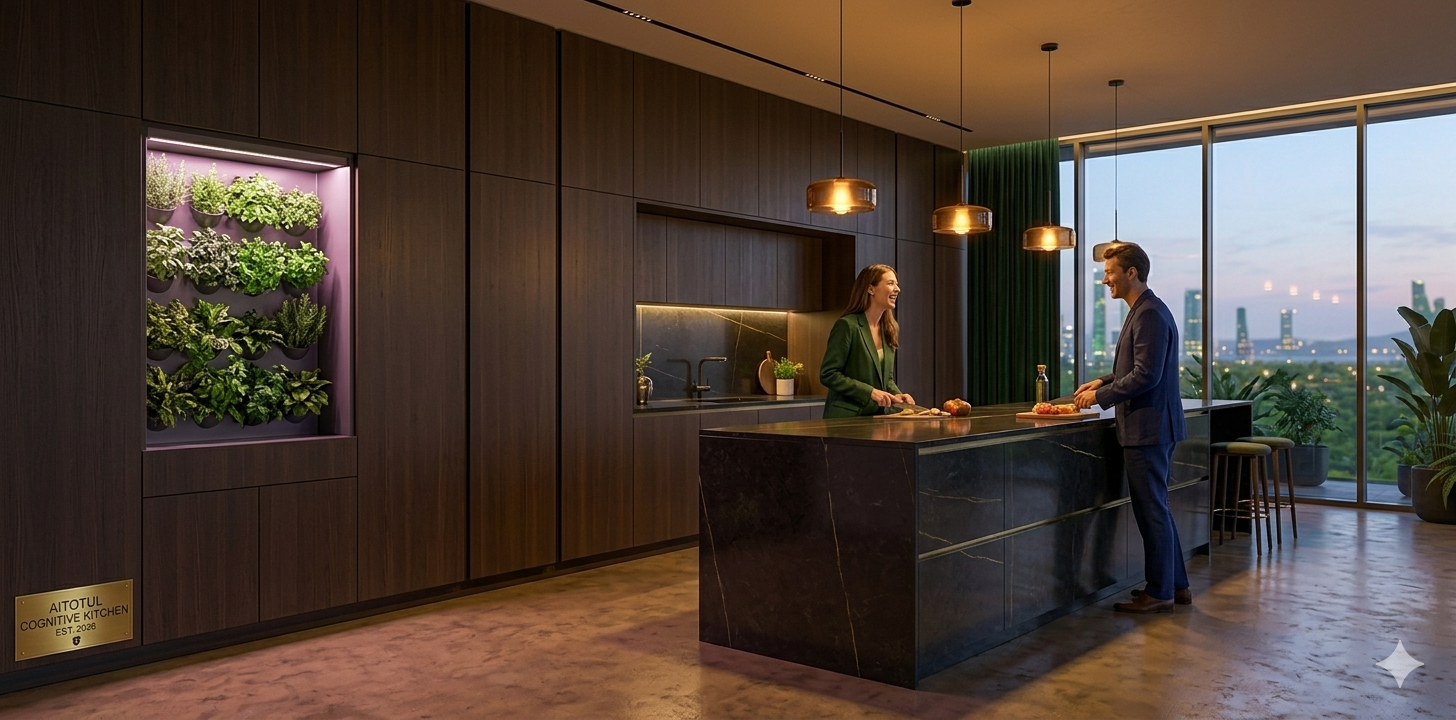
The hallmark of a 2026 Cognitive Kitchen is the elimination of visual noise. High-end designers are now using "disappearing appliance" technology—ovens and refrigerators hidden behind seamless, textured wood or stone panels.
Why? Because every visible appliance represents a potential task or a digital notification. By stripping away the visual cues of "work," the brain can shift from a state of task-management to relational presence. Much like the
2. Adaptive Sensory Lighting (ASL)
The lighting in 2026 is no longer binary. Cognitive kitchens use ASL systems that synchronize with the couple's shared digital calendar and biometric data.
Prep Mode: Bright, high-CRI (Color Rendering Index) light that mimics natural morning sun to enhance focus and safety during cooking.
Connection Mode: When sensors detect two people sitting at the island, the light shifts to a warm, "low-blue" amber spectrum. This triggers the release of oxytocin, the "bonding hormone," making the space naturally conducive to deep conversation.
3. The "Hydration Sanctuary" & Bio-Hacking
In 2026, the simple sink has evolved into a Hydration Sanctuary. Integrated into the island is a dedicated station providing mineral-customized water, hydrogen-infused infusions, and herbal teas—all optimized for the couple's specific recovery needs. This focuses the kitchen on proactive wellness rather than just calorie consumption, turning a quick glass of water into a mindful ritual of self-care.
4. Acoustic Engineering for Conversation
The open-plan kitchens of the 2010s were notoriously loud. In 2026, we use Acoustic Sculpting. Ceiling panels made of sustainable cork and sound-dampening felt are used to create "Speech Pockets." These zones are engineered so that even with a boiling pot or a running faucet, the human voice remains clear and intimate. It ensures that the kitchen remains a place where "how was your day?" can be heard without the need for shouting.
5. Multi-Sensory "Living Edibles"
Instead of a hidden pantry, 2026 kitchens feature Vertical Aeroponic Gardens built directly into the cabinetry. These "Living Walls" do more than provide fresh basil; they act as a bio-filter for the home and provide a vital "green focal point." This is a key element of the
Conclusion: The Soul of the 2026 Home
At AiTotul, we believe that the luxury of 2026 is uninterrupted presence. By designing your kitchen around the needs of your nervous system and your relationship, you are doing more than renovating a room—you are creating a sanctuary for your mind and your partnership. It is the ultimate evolution of the