
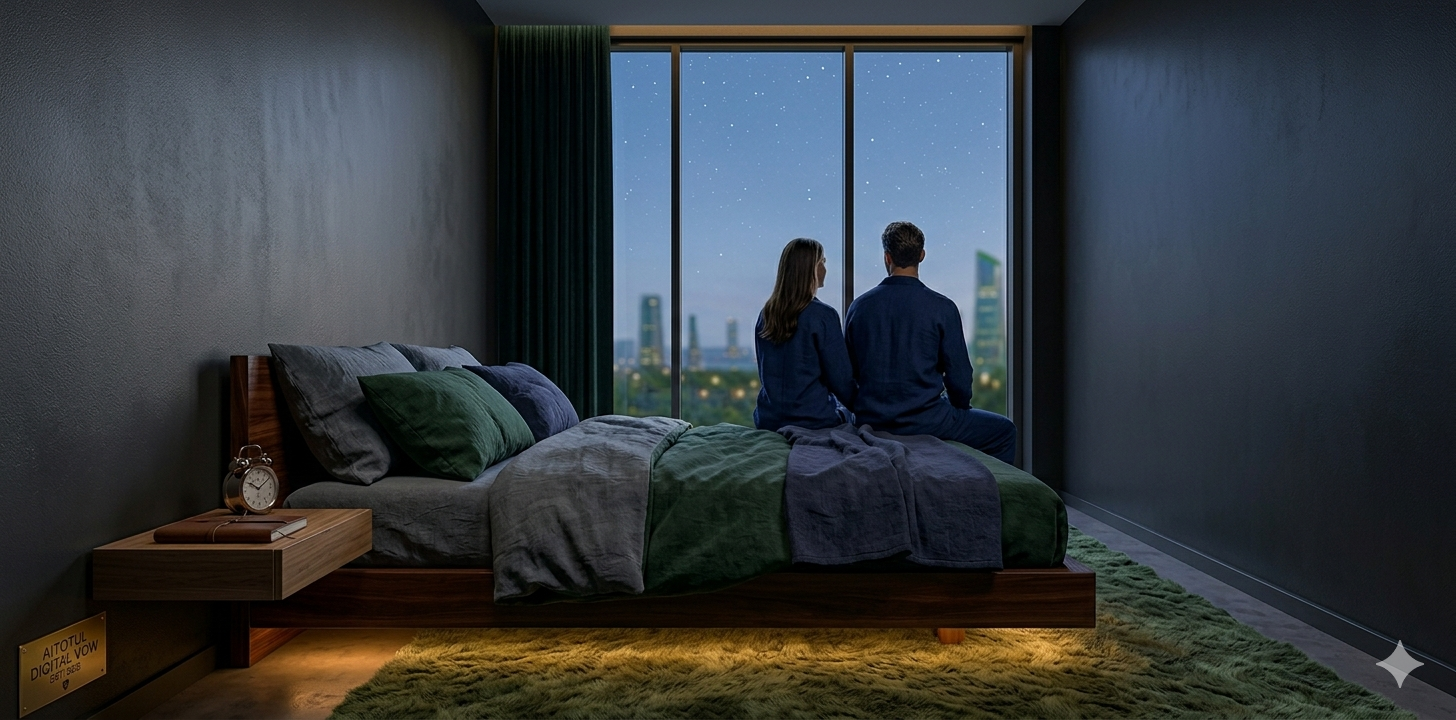
The "Digital Vow" Sanctuary: Why 2026 Couples are Retrofitting "Black-Hole" Bedrooms
For years, we invited the world into our most private spaces. We scrolled through headlines in bed, answered emails under the covers, and let the blue light of a thousand strangers dictate our circadian rhythms. But in 2026, the pendulum has swung. At AiTotul, we are seeing couples move toward the "Black-Hole" Bedroom—a space designed for total electromagnetic and digital silence.
This isn't just about "no phones in bed." It is a structural commitment to the
1. Faraday Architecture: The Shielded Sleep
In 2026, luxury is defined by what cannot reach you. "Black-Hole" bedrooms are being retrofitted with electromagnetic shielding paint and signal-blocking fabrics in the walls.
The goal? To eliminate the invisible "digital hum" of Wi-Fi and cellular signals. Much like the
2. The "Analog Altar"
If the
The Shared Journal: A physical book for "Gratitude Hand-offs" before sleep.
Tactile Alarms: Beautifully crafted mechanical clocks that wake you with soft chimes or light, not a buzzing notification.
3. Biometric Synchronization (Without the Screen)
While we avoid screens, 2026 sleep sanctuaries utilize Ambient Biometrics. Instead of checking an app, the room itself responds to the couple's collective heart rate and body temperature.
Using the principles found in the
4. Somatic Textures and the "Weight of Peace"
In the absence of digital stimulation, the brain craves tactile input. We are seeing a massive trend in High-Mass Bedding—weighted linen duvets and silk-filled pillows that provide gentle "Deep Pressure Stimulation." This physical grounding is the ultimate antidote to the "floaty," detached feeling of a day spent in virtual meetings, pulling the couple back into their bodies and toward each other.
5. The "Zero-Task" Horizon
The Cognitive Kitchen is for focus; the bedroom is for Zero-Tasking. In 2026, any furniture that suggests "productivity"—desks, vanity mirrors with built-in screens, even bookshelves filled with "self-improvement" titles—is being removed. The visual horizon of the room is kept intentionally low and organic, signaling to the brain that the only "job" here is rest and connection.
Conclusion: The Ultimate Digital Vow
At AiTotul, we believe that the "Black-Hole" bedroom is more than a design trend; it is a Digital Vow. It is the promise that for eight hours a day, the world cannot find you, but your partner can. It is the final step in reclaiming your life from the algorithm and returning to the