
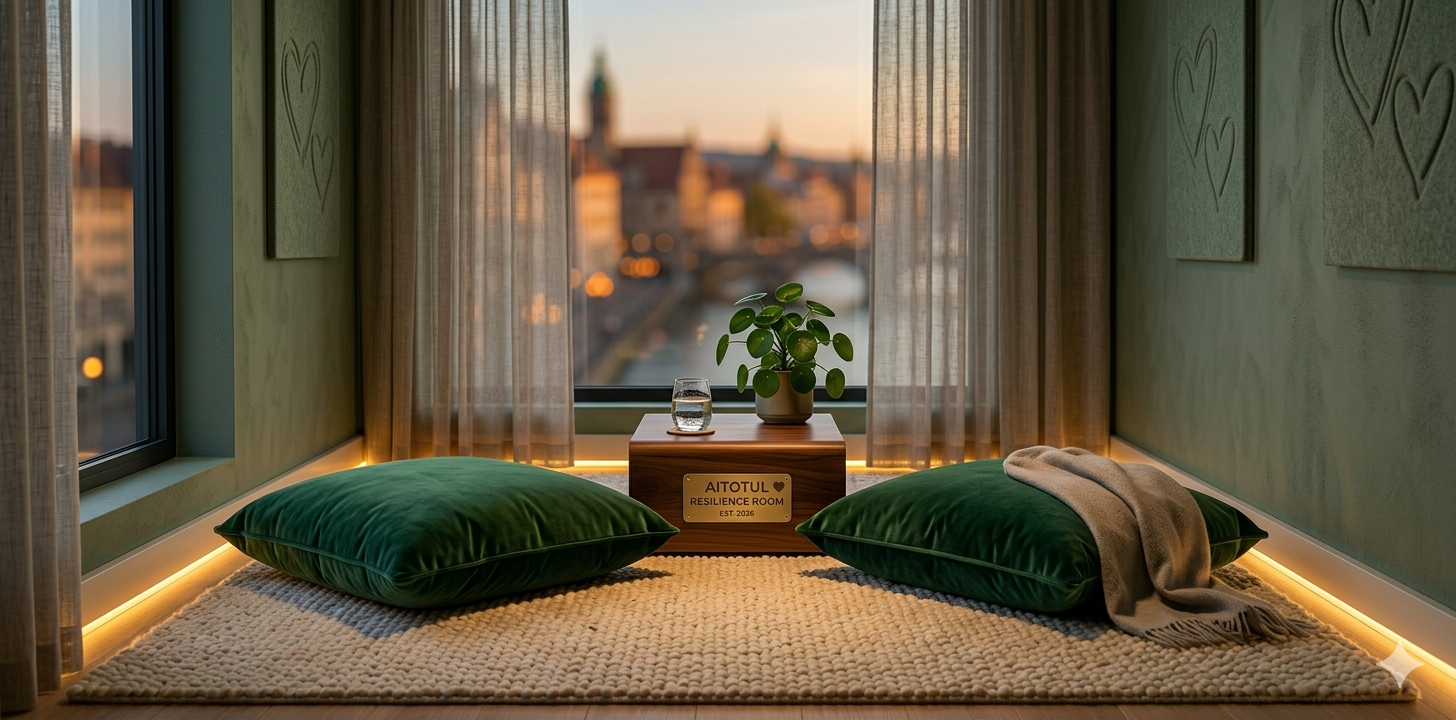
The Resilience Room: Creating a Sanctuary for Conflict Resolution in 2026
The Psychology of a Neutral Ground
When arguments happen in the bedroom or the kitchen, those spaces can become "anchored" with negative energy. A Resilience Room acts as a neutral territory. In 2026, neuro-inclusive design has shown that soft textures, dimmable amber lighting, and the absence of sharp edges can physically lower cortisol levels. Entering this space sends a signal to your brain: "We are not here to win; we are here to understand."
Bio-Feedback and Environmental Calming
Modern 2026 homes often integrate smart-scent technology. During a difficult conversation, your Resilience Room can be programmed to release calming cedarwood or lavender oils. Couple this with acoustic buffering—using moss walls or velvet drapes—to create a "silent cocoon." This ensures that outside noise doesn't add to the sensory load, allowing for the deep, focused listening required for Parallel Intimacy.
Essential Elements of a 2026 Resolution Space
The "Low-Seating" Rule: Use floor cushions or low-profile chairs to keep both partners at the same eye level, reducing subconscious power dynamics.
The 'Cool-Down' Timer: A minimalist sand timer or soft-light clock to encourage "intentional pauses" during heated moments.
The Shared Journal: A physical, hand-bound book kept in the room to write down resolutions, ensuring they aren't forgotten once the conversation ends.
Natural Integration: At least one living plant to represent growth and the organic nature of human relationships.
Moving from Conflict to Connection
The goal of the Resilience Room isn't just to stop fighting; it's to foster emotional agility. By having a specific "ritual space" for repair, you reduce the time spent in resentment. In the high-speed world of 2026, this fast-track to reconciliation is the ultimate wellness hack for your relationship longevity.