
The "Temporal Oasis": Why 2026 Couples are Designing for "Deep Time" in a 5G World
In 2026, the most aggressive predator we face isn't a competitor or a colleague—it's the clock. Between high-frequency trading, instant-delivery logistics, and the relentless stream of the
At AiTotul, we’ve seen a radical response: Temporal Oasis Design. This movement isn't just about slowing down; it’s about using architectural psychology to induce a state of "Deep Time"—a mental space where hours feel like days and connection feels infinite.
1. Chrono-Zoning: The End of the "Clock"
In a 2026 Temporal Oasis, visible clocks are strictly forbidden. Instead, the home uses Chrono-Zoning—a lighting and sound system that mimics the prehistoric passage of time.
Much like the
2. The "Slow-Craft" Gallery
Every Temporal Oasis features a dedicated space for Long-Form Creation. We are seeing a move away from "instant gratification" hobbies. Instead, couples are co-designing spaces for pottery, weaving, or woodworking.
This is the physical extension of the
. By engaging in crafts that take weeks or months to complete, partners practice "patience-bonding," creating artifacts that tell the story of their shared growth rather than their consumption.
3. Olfactory Time-Stamping
In 2026, we’ve learned that memory is anchored in the nose. Temporal Oases utilize Seasonal Scent-Looping. Every three months, the home’s ambient scent shifts entirely—from crisp ozone and damp earth in spring to smoky vetiver and clove in winter. These distinct "Olfactory Eras" act as anchors. When you look back on your year, you don't remember it as a blur of emails; you remember "The Month of Sandalwood," providing a psychological sense of a life well-lived and deeply experienced.
4. The "Hush" Threshold
Borrowing from the
5. Architectural Geotropism: Grounding for the Soul
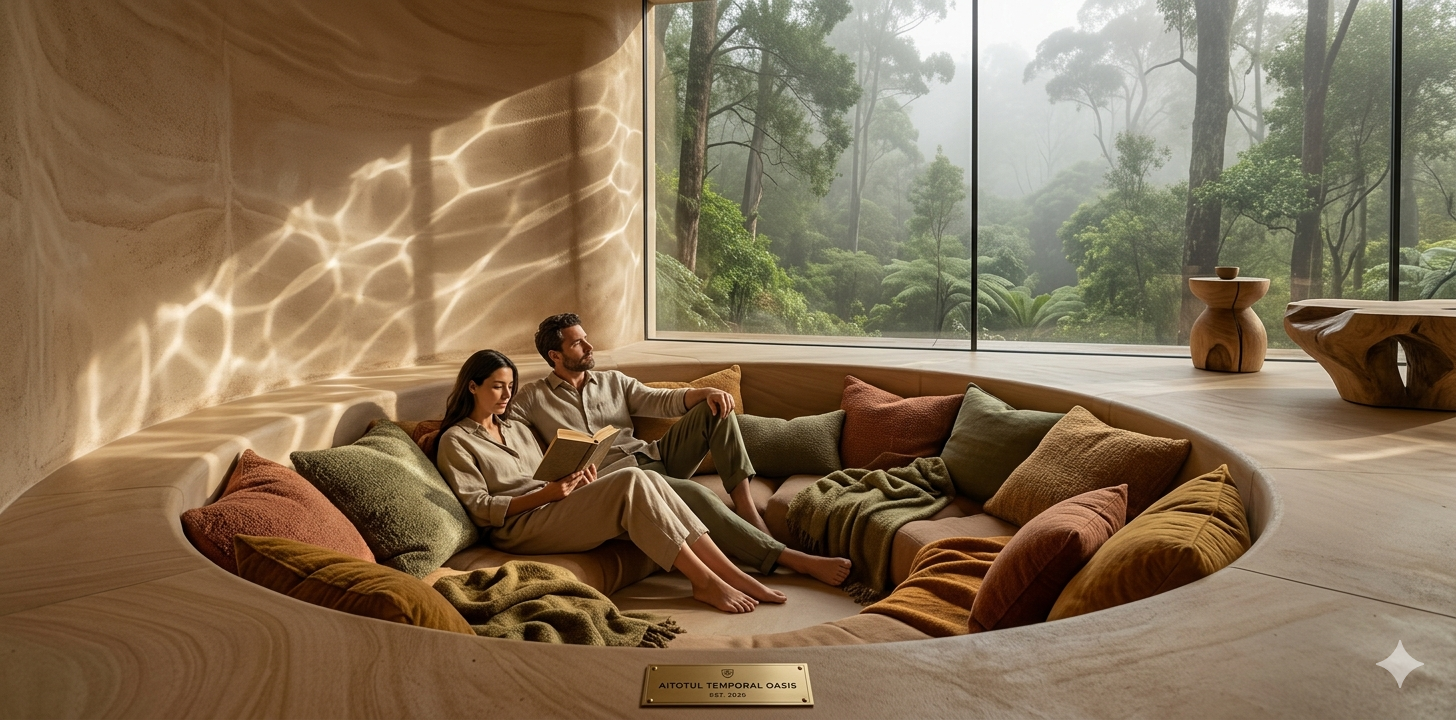
The final element of "Deep Time" design is Geotropism—furniture and flooring that draw you toward the earth. We are seeing a move toward Sunken Conversation Pits and floor-level dining.
By physically lowering the center of gravity in the home, you naturally trigger the
Conclusion: Reclaiming the Fourth Dimension
At AiTotul, we believe that space is only half of the interior design equation. The other half is Time. By intentionally designing your home to slow your perception of the world, you are giving your relationship the most precious gift possible: the space to truly be present.